
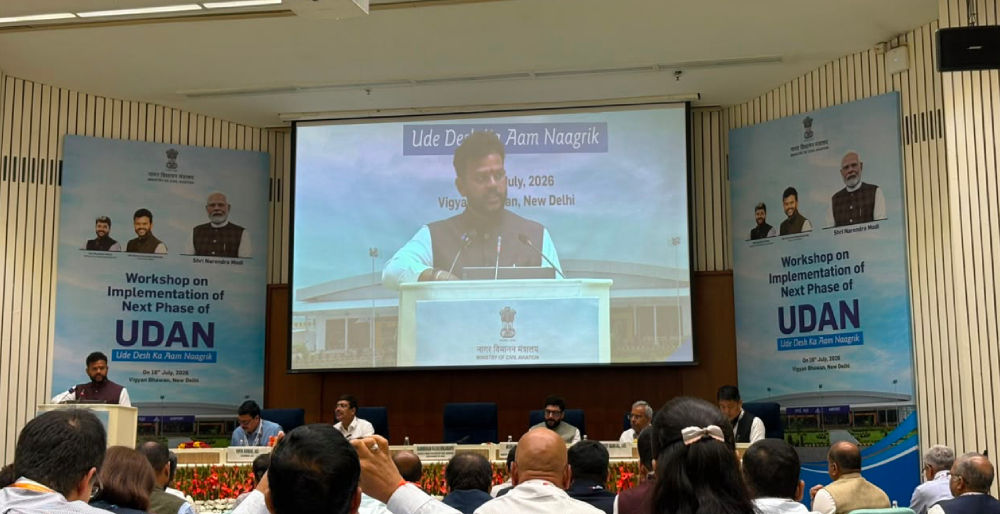

16 July 2026 | Vigyan Bhawan, New Delhi
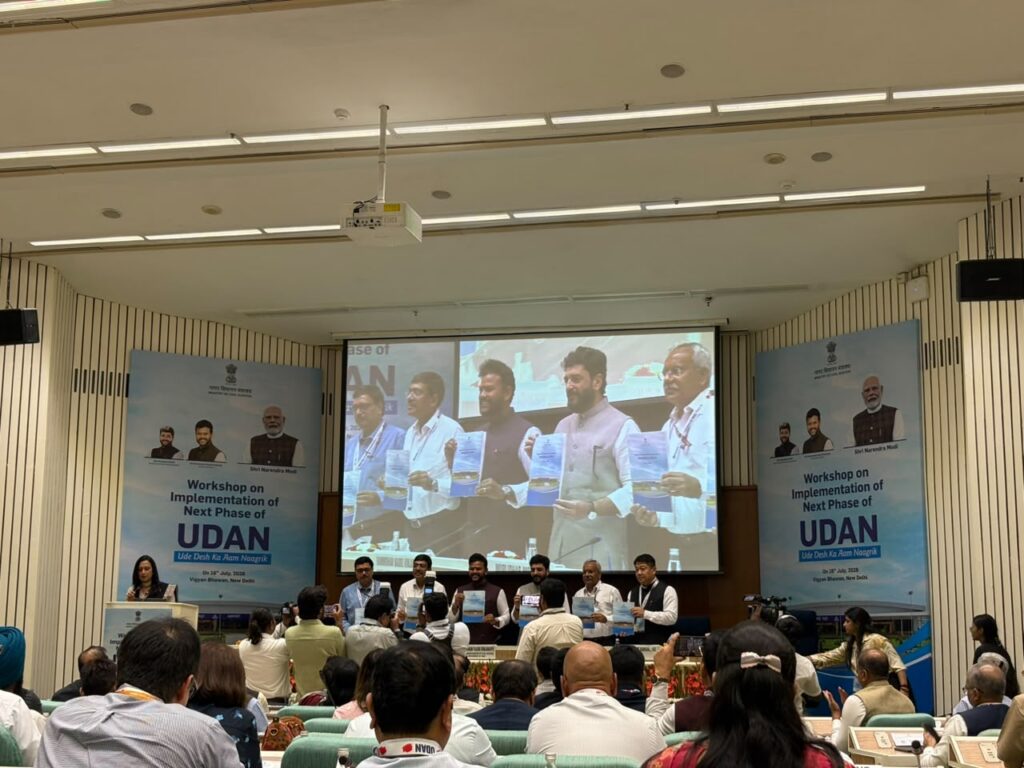
Skypulse Solutions IFSC Pvt. Ltd. had the privilege of participating in the Stakeholder Workshop on the Implementation of the Next Phase of UDAN (Ude Desh ka Aam Nagrik), organised by the Ministry of Civil Aviation (MoCA) on 16 July 2026 at Vigyan Bhawan, New Delhi. The workshop brought together policymakers, state governments, airlines, airport developers, leasing companies, financiers, and other aviation stakeholders to discuss the roadmap for the next evolution of India’s Regional Connectivity Scheme (UDAN).
The workshop highlighted the Government of India’s vision to strengthen regional air connectivity through enhanced infrastructure, sustainable airline operations, and greater collaboration between the Centre, State Governments, and private industry. For Skypulse Solutions, the event provided valuable insights into emerging opportunities across aircraft leasing, airport infrastructure financing, fleet expansion, and aviation asset management.
A New Chapter for Regional Aviation
The proposed UDAN 6.0 framework represents one of the most significant upgrades to the Regional Connectivity Scheme since its launch in 2016. The Government announced plans for a substantially expanded programme with approximately ₹12,159 crore allocated towards the development of 100 airports over the next ten years, complemented by an additional ₹2,577 crore dedicated to operational and maintenance support for regional aerodromes.
The revised framework aims to address long-standing challenges such as airport operationalisation delays, route sustainability, funding limitations, and regulatory complexities while creating a stronger foundation for long-term regional connectivity.
Major Policy Announcements
During the workshop, the Ministry presented several structural reforms that are expected to redefine India’s regional aviation ecosystem.
One of the most notable changes is the expansion of subsidised RCS seating. Under the proposed framework, airlines operating larger aircraft will be eligible to designate up to 50% of aircraft seating capacity as RCS seats, replacing the previous flat cap of 40 seats. The revised model also introduces a five-year tapered Viability Gap Funding (VGF) structure, encouraging operators to gradually transition towards commercially sustainable operations.
The Ministry also announced stricter eligibility requirements for participating airlines. Only operators holding a valid Air Operator Permit (AOP) with demonstrated operational readiness will be eligible to participate in future bidding rounds, strengthening implementation discipline and reducing speculative bidding.
Introduction of Challenge Mode
A key highlight of the workshop was the introduction of Challenge Mode, a competitive mechanism for selecting airports and heliports for infrastructure development.
Under this model, State Governments will nominate eligible airports and airstrips, which will then be evaluated through a structured scoring framework based on factors including:
- State Government commitments
- Regional connectivity potential
- Infrastructure readiness
- Tourism and economic potential
Selected airports will receive financial support for development, creating significant opportunities for airport operators, developers, investors, and aviation infrastructure partners.
Stronger State Participation Through a New MoU Framework
Another major announcement was the proposed State Services Memorandum of Understanding (MoU) between the Ministry of Civil Aviation, Airports Authority of India (AAI), and individual State Governments.
The draft framework formalises State responsibilities relating to:
- Viability Gap Funding (VGF) contribution
- Land availability
- Fire and security services
- Concessional ATF VAT
- Utility support
- Airport connectivity infrastructure
The workshop also discussed timelines for reimbursement, governance mechanisms, default provisions, and annual monitoring, creating greater accountability across stakeholders.
New Opportunities for Aircraft Leasing and Aviation Finance
For organisations operating within aviation finance and leasing, the workshop underscored the growing importance of access to modern regional aircraft and helicopters.
The Ministry specifically identified aircraft leasing, regional fleet financing, airport infrastructure investment, MRO expansion, and aviation financing as sectors expected to benefit from the next phase of UDAN. As regional connectivity expands, demand is expected to increase for turboprops, helicopters, regional jets, and innovative financing structures that support fleet acquisition and long-term asset management.
This evolving landscape aligns closely with Skypulse Solutions’ focus on aircraft leasing, helicopter leasing, fleet management, aviation consulting, and asset management services through India’s International Financial Services Centre (IFSC).
Looking Ahead
The Ministry shared an implementation roadmap that includes regional consultations with State Governments, execution of State Services MoUs, publication of the Challenge Mode Master List, and the launch of the next bidding round later this year. These milestones are expected to shape India’s regional aviation ecosystem over the coming decade.
As India’s aviation sector enters this new phase of growth, Skypulse Solutions remains committed to supporting airlines, operators, investors, and government stakeholders with innovative leasing, financing, and aviation advisory solutions. Participation in forums such as the UDAN Stakeholder Workshop enables us to remain closely aligned with national aviation policy while delivering informed, future-ready solutions to our clients.