

Helicopter Emergency Medical
Services
Swift, life-saving medical transport across urban and remote areas
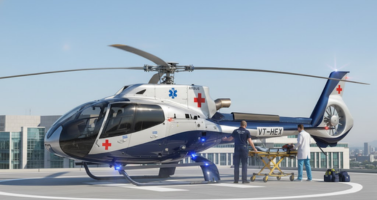
Helicopter Emergency Medical Services
Helicopter Emergency Medical Services (HEMS) are a critical component of modern healthcare systems, enabling rapid, reliable, and efficient medical transport. By combining speed, mobility, and access to hard-to-reach locations, HEMS significantly improves outcomes for patients in time-sensitive, life-threatening situations.
What is HEMS?
HEMS is a specialized form of pre-hospital emergency care that transports critically trained medical teams directly to patients in remote, congested, or infrastructure-limited locations. Helicopters can deliver urgent care on-site and transfer patients to appropriate medical facilities much faster than ground ambulances, often within the “golden hour,” which is crucial for survival in trauma, cardiac, and other emergencies.
How HEMS Works
- Rapid Deployment – Helicopters can reach patients in urban, rural, or disaster-affected areas where traditional ambulances may face delays.
- On-Site Medical Care – Trained medical personnel provide immediate stabilization before and during transport.
- Critical Transfers – Patients are safely transported to hospitals or specialty care centers equipped to manage severe injuries, medical emergencies, or organ transplants.
Specialized Configurations – Aircraft can be medically outfitted for trauma care, neonatal transfers, high-risk obstetrics, or organ transportation.
Benefits of HEMS
- Faster Response Times – Reduces delays associated with road traffic and inaccessible locations.
- Access to Remote Areas – Enables care for patients in geographically challenging regions.
- Higher Survival Rates – Rapid transport and immediate medical intervention improve outcomes for trauma and critical patients.
- Specialized Medical Transfers – Supports organ transplants, high-risk pregnancies, and emergency medical evacuations.
- Continuity of Care – Coordinated transfer ensures patients receive uninterrupted treatment from the scene to the healthcare facility.


Typical Use Cases
- Trauma patients from accidents or disasters
- Emergency obstetric or neonatal transfers
- Critically ill patients in remote or congested locations
- Rapid transport of organs for transplantation
- Medical tourism or cross-border urgent care
Why Helicopter Medical Transport Matters
Time is critical in medical emergencies. HEMS provides agile, point-to-point access, enabling lifesaving interventions where conventional transport cannot meet the speed, reach, or medical support required. By facilitating immediate care and rapid transfers, helicopter medical services are a vital tool in saving lives and improving patient outcomes.
Helicopter Ambulance Services In Emergency Medical Conditions
Trauma Care with Helicopter Medical Services
Helicopter emergency medical services (HEMS) are among the fastest ways to transport critically injured patients. By providing rapid, point-to-point access, helicopters enable trauma patients to reach appropriate medical facilities within the “golden hour,” a critical window for improving survival outcomes.
- Rapid access to accident sites, congested urban areas, or remote locations.
- Medically equipped cabins allow stabilization during transit.
- Coordination with hospitals ensures continuity of care from scene to treatment.
Organ Transplant Transportation via HEMS
HEMS plays a vital role in time-sensitive organ transport, ensuring organs reach transplant centers quickly and safely. Air transport reduces transit times, preserves organ viability, and supports lifesaving procedures.
- Rapid aerial logistics help meet critical timing requirements for transplants.
- Helicopters can cover long distances faster than road ambulances.
- Aircraft can be configured for secure, medical-grade transport.
Emergency Medical Evacuation for Road Accidents
Helicopters are crucial in rapid evacuation of severely injured patients from road accidents or multi-vehicle collisions. They reduce delays caused by traffic or inaccessible terrain, improving survival chances in critical situations.
- Improves outcomes when ground-based ambulances are too slow or impractical.
- Fast transport from highways or remote accident sites to trauma centers.
- Onboard medical equipment allows life-saving interventions during flight.

Helicopter Emergency Medical Services (HEMS)
Reliable helicopter leasing options designed to support critical medical transport operations with configurable cabin and mission capability.