
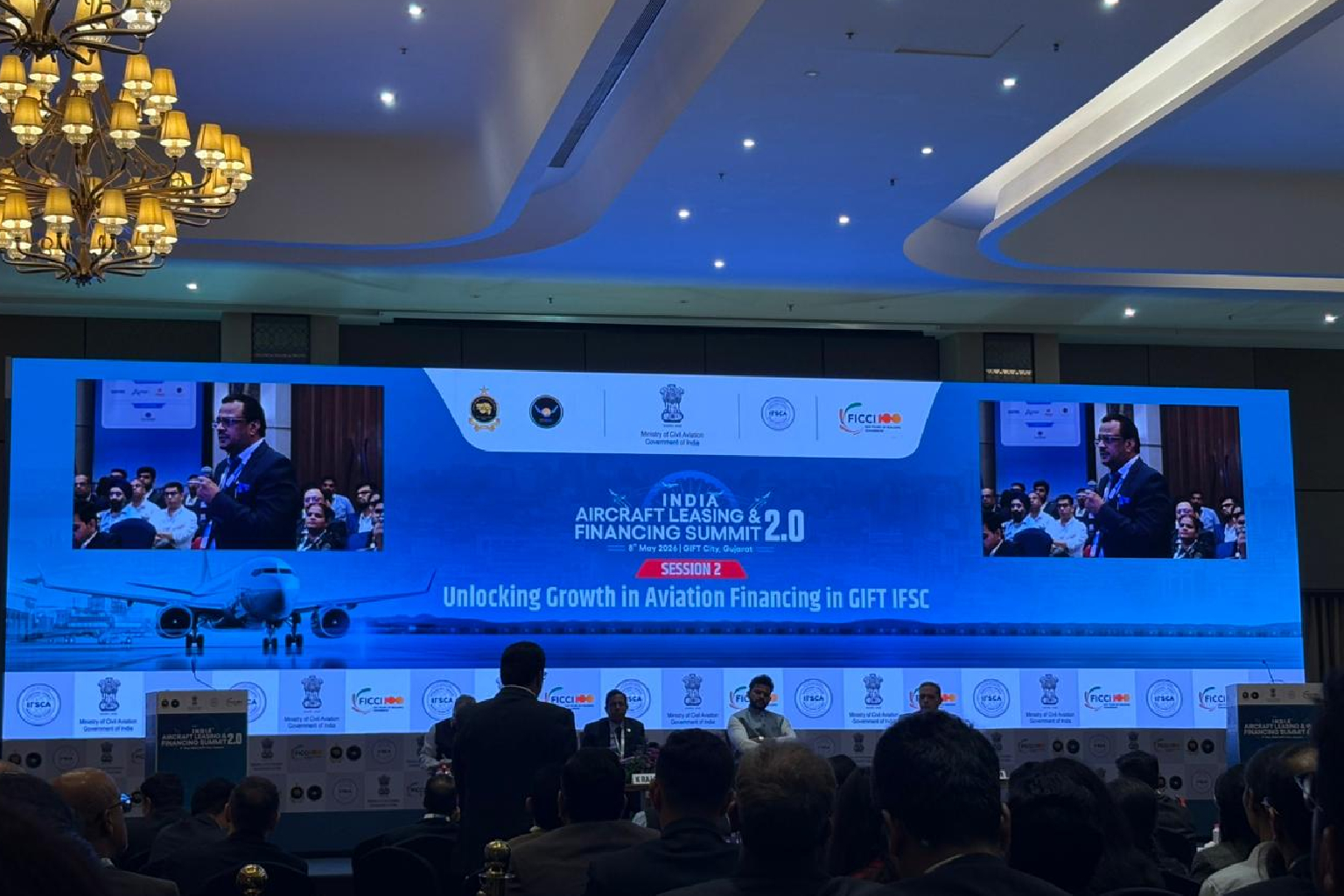

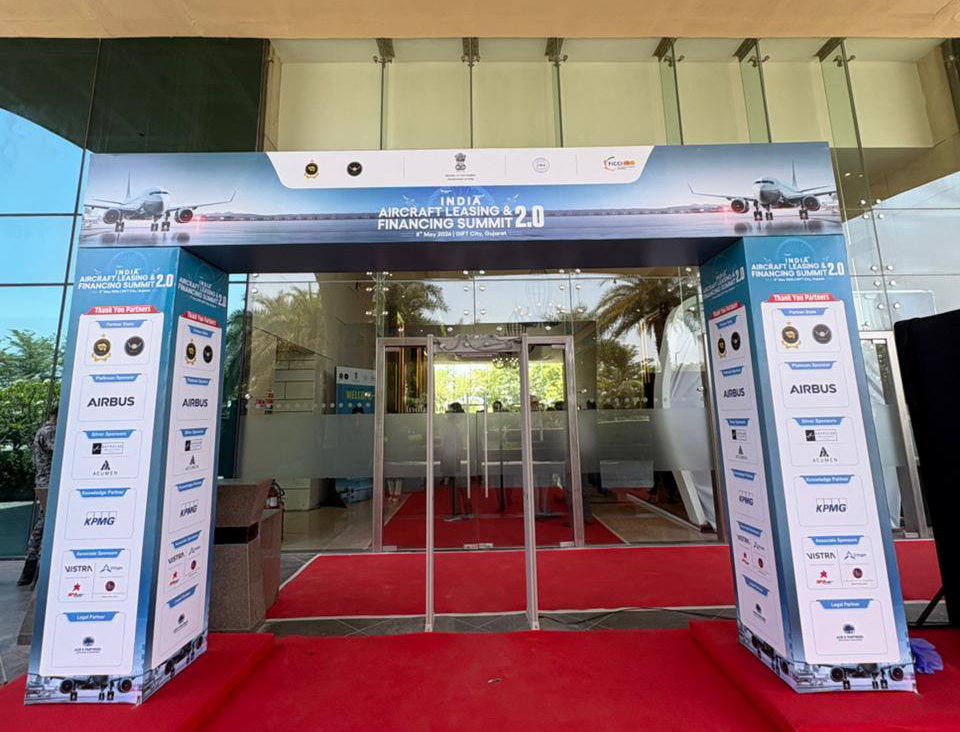
India’s aviation financing ecosystem may have reached its most decisive inflection point yet. The recently concluded India Aircraft Leasing and Financing Summit 2.0 at GIFT City IFSC sent a clear signal: India is no longer content being merely one of the world’s fastest-growing aviation markets—it now wants to become a serious global player in aircraft leasing, financing, and aviation asset management.
Three key messages emerged strongly from the summit.
First, the Government is aggressively positioning GIFT IFSC as India’s aviation financing gateway, with Union Civil Aviation Minister Kinjarapu Ram Mohan Naidu stating that aircraft leasing activity at GIFT City is expected to double within the next two years. He emphasized that India’s ambition is not simply to serve domestic demand, but to evolve into a globally integrated aviation financing hub competing with established international centres.
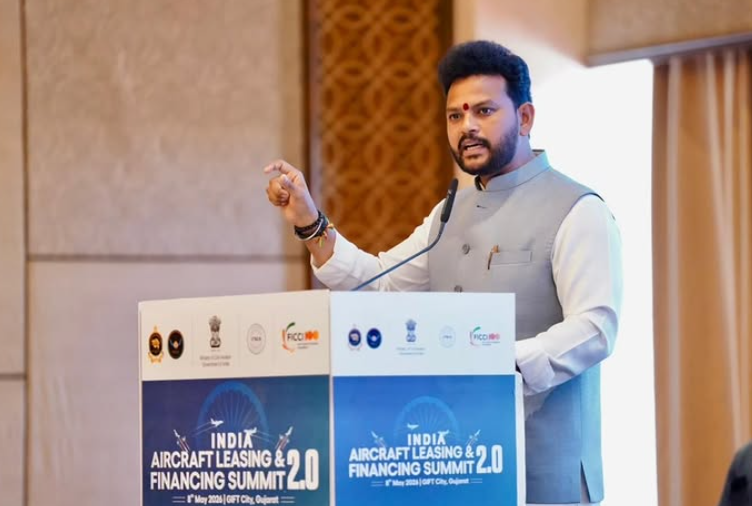
Second, policymakers acknowledged that the next phase of growth will depend on stronger legal frameworks, tax reforms, dispute-resolution mechanisms, and long-term policy predictability. Discussions highlighted the need to align India’s financing ecosystem with leading global aviation jurisdictions to attract international capital and leasing activity.
Third, the summit reinforced an industry reality that operators across India already understand well: accessible financing remains the single biggest constraint to scaling aviation operations, especially in rotor-wing services, regional connectivity, EMS, tourism, and emerging air mobility sectors.
This is precisely where Skypulse is positioning itsel- not merely as a lessor, but as an ecosystem enabler focused on solving structural bottlenecks in India’s aviation growth story.
During industry interactions at the summit, Skypulse highlighted several persistent operational challenges affecting emerging and mid-sized aviation businesses, including customs-related procedural delays, financing accessibility gaps, fleet expansion hurdles, and the need for faster, more operator-friendly regulatory processes. These issues are particularly critical for helicopter and light fixed-wing operators, where seasonal demand patterns, high capital costs, and limited financing flexibility often constrain growth.
Skypulse’s participation reflected a broader industry shift underway in India’s aviation ecosyste- from ownership-heavy models toward more agile, leasing-led growth structures. By operating from GIFT IFSC, Skypulse is working to reduce aircraft acquisition costs, improve turnaround times, and expand access to helicopters and regional aircraft for operators across India and Asia. Its larger focus extends beyond leasing into lifecycle asset management, aviation consultancy, and supporting mission-critical sectors such as regional connectivity, pilgrimage aviation, tourism, EMS, and charter mobility.
The progress made by GIFT IFSC over the last few years suggests that India’s aviation financing ambitions are steadily moving from policy vision to operational reality. According to the Civil Aviation Minister, reforms introduced at the Centre have already resulted in 38 aircraft lessors establishing presence at GIFT IFSC as of December 2025. The Government has also committed significant investments toward airport and aviation infrastructure expansion, while India’s commercial fleet is projected to grow substantially over the next decade.
What makes this moment particularly significant is that India’s aviation growth is no longer being viewed only through the lens of airlines and airports. Increasingly, attention is shifting toward the larger enabling ecosystem—leasing, financing, MRO, training, asset management, drones, and rotor-wing connectivity—which will ultimately determine how efficiently and affordably aviation scales across the country.
The next decade is likely to define whether India can truly emerge as a globally competitive aviation hub. If current momentum continues, GIFT IFSC could evolve into one of the most important aviation financing centres in Asia, while companies like Skypulse may play a pivotal role in ensuring that the benefits of this transformation extend beyond large airlines to regional operators, helicopter services, and the broader mobility ecosystem that connects India’s most underserved geographies.